
Lived Experience Interview:
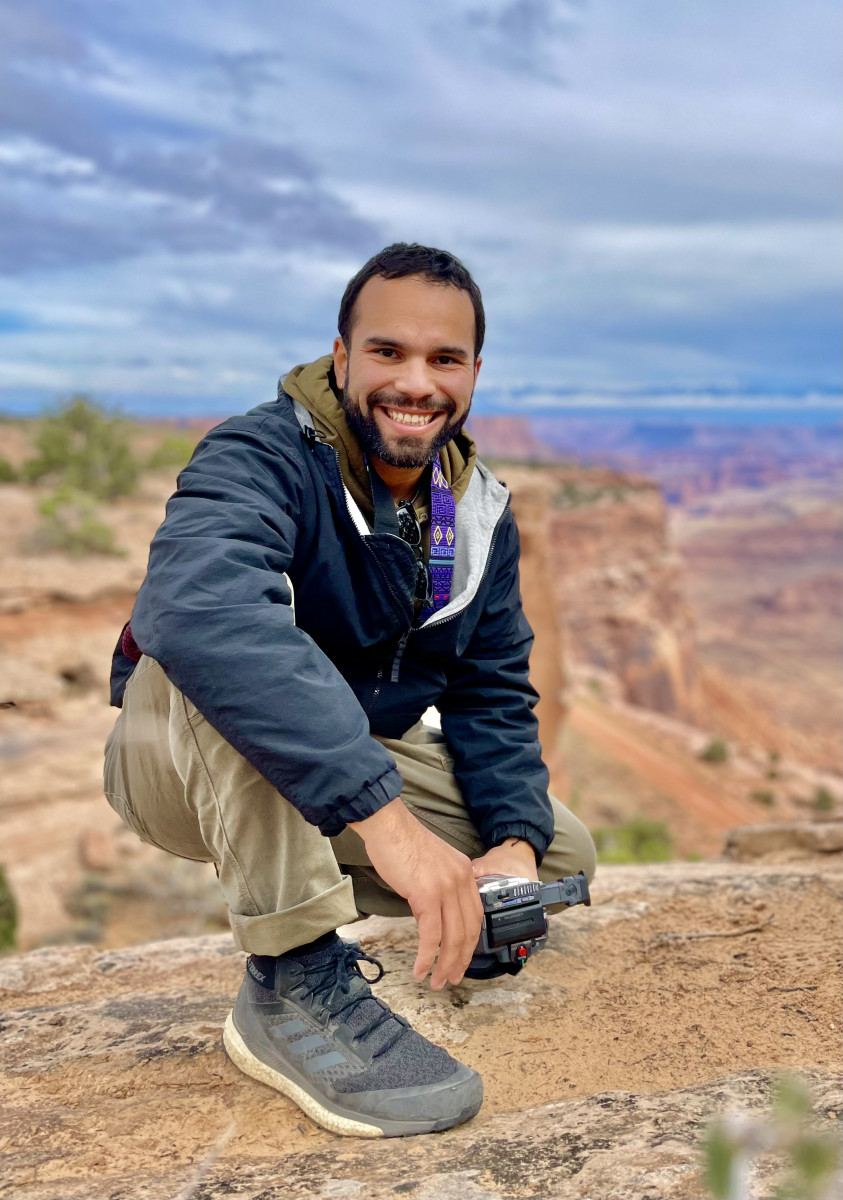
Enrique Rivera — Filmmaker, Organizer, Investigative Reporter, Teacher
In this interview, conducted at the 2025 URBAN National Conference by Ebonee Brown, Enrique Rivera talks about his experiences as a filmmaker, teacher, investigative journalist, and community organizer. Having been raised in Bridgeport, CT, with a stint in LA, Enrique offers insights on the many ways he and his family have worked to create community and work for justice.
JCEC:
Can you tell me a bit about yourself, the work that you do, and how you ended up being connected to the URBAN Research Network?
Enrique:
My name is Enrique Rivera, and I was born and raised in Bridgeport, Connecticut. I lived in Los Angeles for many years, working in documentary filmmaking, and I was doing a lot of documentary work, mostly archival preservation and investigative reporting. And while I was doing that, I was doing some community organizing work and trying to reconnect and support my community in different ways. Part of that looked like helping my mom starting a nonprofit In Bridgeport, Connecticut called Love Link. It’s a resource connector, ultimately, trying to connect people with resources that they need now to thrive, and empowering them with skills they need. Then, at the same time while I was doing that, I just recently started a position teaching youth — high school students — at a social justice liberatory education center, and I’ll be working with high school students, teaching them about social justice issues. This season we’re focusing on the theme of housing justice and teaching them how to make films. And that has been really exciting, because I feel like there’s a real… how do we empower different communities?
This is my first time participating in the URBAN conference. I presented a panel yesterday that was focusing on documentary. It was called Reviving Radical Documentary Histories and Using Documentary as Community Practice. And my intention was trying to think about how we don’t have to keep on reinventing the wheel when it comes to some of the social organizing work that we’re doing today, if we look at our past. Especially, and more specifically, if we look at documentaries or how media was being used by radical parties, by different organizing groups, we can learn a lot from the lessons and the efforts that they were making to try to tell or resolve some of the same conflicts or problems or challenges that we’re still up against today. And then, in turn, revisiting that history today, I think the necessity in today’s context, more than ever, is that we make sure that that community practices and multi-disciplinary and interdisciplinary and multilingual and thinking about all the different types of industries that can come together can all help to resolve certain challenges or to improve our lives or to think about how equity could be viewed differently. And what happens when you make a documentary or a story or a podcast or an article or a poetry or whatever medium you want to use to express yourself, and you’re connecting not just the people in the community, but like people tangentially connected. That’s what got me involved in URBAN.
JCEC:
How do you tend to think about collaboration and what kinds of collaborative relationships or practices are you or your organization engaged in?
Enrique:
When I think about collaboration, I think about community. I think about the intention. I guess I start with intention. Are we trying to seek a specific product because of this type of collaboration? What’s our goal? And what is our foundation for of creating this type potential collaboration? I think sometimes when you start to get to the foundation and try to hold people accountable and hold your team and yourself accountable, sometimes you recognize that the vision might not be as alive. So, what happens if you’re doing a project with a community and they don’t want themselves on video? Are you willing to accept that, even if it is not aligned with what you wanted and your goals? But I think intention and foundation have been like the most important things when I think about collaboration. When it comes to documentary, I’ve oftentimes felt that so often it can be very extractive storytelling, where we just parachute into a specific community and bounce out of there when we’re done getting and it’s this really kind of transactional interaction. I’m coming here to collect and you’re going to give me your time so you can give me something, rather than being this space that can be possible for other ideas and ideations and inspiration, but also something that’s full of reciprocity, and something that could be mutually beneficial, and something that could lend itself to other potential collaborations too, like it doesn’t have to end at just this potential single point.
Weaving in different types of storytelling, I’ve been thinking and studying a lot about oral history, and how do you bring in oral history together with documentary? And, sure, there’s a lot of journalism in documentary, but those are kind of a different cut of cloth. I think when you bring in oral history, you’re prioritizing the person, the interviewer. You’re transforming that relationship from interviewer to narrator. They’re the ones who are in charge of telling their story, and you’re giving them the power too, right? There’s co authorship, co creation, and that’s, that’s what I think about in terms of collaboration. I don’t want there to be this hierarchical structure. I want to decolonize the frameworks that we’re creating and think about how we can co create so we can all feel like we’re authors to protect the things that we’re spending our time doing.
Safety. It’s so important. When we think about community safety and what makes one person feel safe versus another person, it’s dramatic. Who’s going to call the cops if something goes down? And if there’s cops here, how do I feel safe? The other element to think about is trauma-informed storytelling and are we thinking about all these other kinds of interconnections? Are we thinking about privilege when it comes to who is initiating the invitation to collaborate? Who is doing the collaborating, who is doing the speaking? I love thinking about safety in this transformative way of how we could really push beyond what typically is considered.
One more point. I’ve been reading a lot of adrienne maree brown and specifically Emergent Strategy: Shaping Change, Changing Worlds, which is referenced a lot in organizing spaces, I love bringing it into any space. And the ideas like ‘how there are these different patterns that exist throughout society and throughout our relationships with each other and our relationships with the Earth,’ right? And if we can recognize and tune in to some of these patterns, we might be able to see what types of potential solutions or strategies can exist so that we can live better lives, and so that we can connect and protect our most marginalized and actually create equitable communities. So, in the collaboration space, what types of emerging potential strategies can exist when we’re trying to collaborate with different people?
JCEC:
Based on your experience, what would you say are some collaboration-best-practices that you would suggest others use in their collaborative relationships — particularly in this current context of great social upheaval and uncertainty?
Enrique:
I think best practices are really important, and it does go back to what I was talking about, when I was talking about what is foundational, but I think that the most important thing with best practices is actually articulating them and having language for them so we can actually hold ourselves accountable; myself included, right? Like, I’m not trying to do ‘I got you!’ I’m trying to also have a compass. I like to think about compasses recently, like something to guide me back. There’re a million things going on in the world outside, and a lot of distractions, and then there’s family and friends and everything going on. We also need that internal compass ourselves, yeah, and to remember, like, Wait, why am I doing this? What am I doing? Who am I doing this for? What? And what are the practices that I want to align myself with? And how is it that we could make principles, ethics, values actually at the center of our best practices? So often, I think, capitalism makes us feel like we can’t center that, but the truth is, we can, and it starts by setting up that foundation. So, I think some of the most intentional best practices are just trying to make sure, say, when it comes to thinking about oral history, one of the main practices is do no harm, right? In what ways could I potentially cause harm? If I’m asking someone to talk about or rehash some of their traumatic experiences or lived experiences, how am I trying to make sure I’m handling it with gentleness? And giving space and authority for them to say, ‘hey, I want to stop this interview,” for example, at least in this context. But I think that with best practices, what’s really helpful when you’re thinking about the collaborative space is that more minds are better than one. There are multiple industries and spaces where we could think about some things that we might have not thought about like, say, ableism and accessibility. How can we make sure that some people who aren’t really able to read or write in the same way, or process in the same ways, how can they create art instead and maybe drawing at the same time, right? We put this pressure, especially in academia, to write … the written word .. ‘word as bond.’ The thing that’s funny about ‘word is bond’ is that that statement is actually about the physical oral word. It’s not about written word. But the written word, in academia’s sense, has become the only thing that is allowed for people to be considered worthy of their story preserved or told in history. Look at history textbooks. It’s all written. So, in what ways we honor different types of ways of being and creating and sharing with each other.
JCEC:
Is there anything you would like to add?
Enrique:
Thank you for doing this and thank you for being the one to approach me and ask me I wanted to be interviewed. Often when we’re being asked to interview, share our stories, or share our perspectives, it just can sometimes not always feel safe. Nothing to do with the individual person. It doesn’t but it’s just like my past experiences have led me to feel this way and I recognize that’s biased but we’re evolving. But hearing the intention. from you, and the work that you and JCEC are doing is really exciting to me.