
Lived Experience Interview:
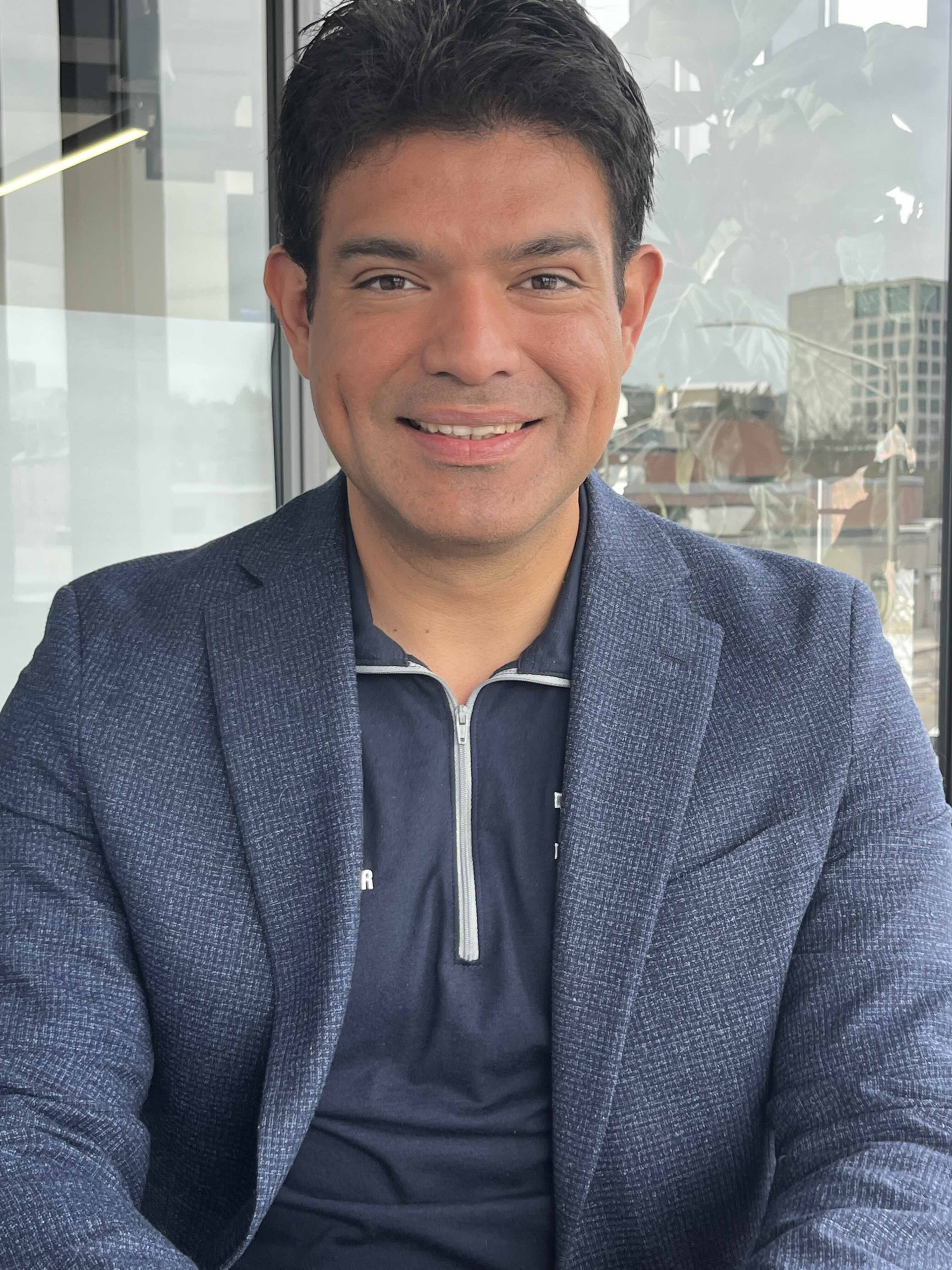
Dr. Juan Sorto — researcher and climate/international community activist
In this interview, conducted at the 2025 URBAN National Conference, Dr. Juan Sorto reflects on climate change, immigration, grassroots collaboration with local El Salvadorian communities through Friends of El Salvador, and the importance of leveraging non-traditional funding sources like private donors in this work.
JCEC:
Can you tell me a bit about yourself, the work that you do, and how you ended up being connected to the URBAN Research Network?
Juan:
My work is half practitioner, half academic because the work comes from two distinct projects. One is focused on climate change in the Gulf Coast area. Texas Southern University is an HBCU. We study a lot about the climate and we also have an urban planning school, which is where my degree is. I have a PhD in Urban Planning and Environmental Justice. The other part of it is the practitioner, and I’m looking at it more from a global perspective. So, when we look at climate justice, it’s not just a regional phenomenon, it’s obviously, you know, a global phenomenon that’s happening at the moment. And so for the last two years, we’ve been conducting research in El Salvador, the country of El Salvador, and how climate changes have impacted migration to the United States. We have done this through the creation of Friends of El Salvador, which is a nonprofit organization based out of Houston, but 100% of the research that we’re doing, and the programming, is being tailored to El Salvador to empower communities. We are conducting that analysis at the moment, but with a focused international point of view.
That’s been a very fascinating point, because we tend to think that migration — or at least in what has been outlined the last couple of years within Latin America — is that migration tends to be associated because of political and crime rate. But the truth of the matter be told, the communities that we’re currently serving, which is 14 communities — they are rural communities — and the airport is about three hours away from these rural communities that we’re serving. The research that we’re conducting has given us the point of view that it hasn’t been crime necessarily that has caused the migration pattern, but it’s been the loss of crops in stable seasons. And because this country hasn’t had a census for over 20 years, we are also doing a census track, as well, in communities. This basically comes out of research from a postdoc. So, collaborative effort is definitely something that we are always trying to advocate for because funding hasn’t really been available; not only in the country, but also when you look at funding from an HBCU point of perspective. Historically Black Colleges and Universities struggle more than your top-tier institutions for funding; yet, we’re still making the same type of important work that your Brown and your Yale and your Harvard are doing,
JCEC:
How do you tend to think about collaboration and what kinds of collaborative relationships or practices are you or your organization engaged in?
Juan:
Yeah, so the way we look at collaboration, or at least from the way I approach my research, is from a very grassroots, bottom-up approach. And I’m not just referring to grassroots such as an established nonprofit organization like NAACP or LULAC or so forth, but really what drives those individuals who may not necessarily have the capacity or the time to be involved with unions, for example, to still become productive citizens. And so, when I was doing my dissertation, I was in essence looking at not the unions — not your typical what we call grassroots — but really like your homeowners associations or your PTOs and so, from that point of view. And so collaborative efforts for us, it really comes from this very raw study.
And then once you figure out, “Okay, what is it that these communities are asking for?” then how do you bring in these other players into the mix? How do you bring the funders, the foundations, the grants, the universities and so forth? Or how do you bring them into, “Okay, this is what the communities are actually needing.” And it’s not only important for us to understand it from that point of view, because you’re giving us your understanding from the community perspective, but you’re also utilizing effectively those resources, meaning the time that it requires for staff to actually work with the communities and also the money that’s being allocated. We want to make sure that we are good stewards of that funding that comes available to us. And so, while the Bullard Center has given me, in a sense, a freedom to work with these communities, funding from a nonprofit perspective is my other hand for Friends of El Salvador. It has not necessarily come from grants, but it’s come from your private donors, such as even going so far as going into corporations like, for example, Brooks tennis shoes or Nike. For whatever reason, they contribute maybe for tax purposes or maybe because they really want to do good in the community. How do you go outside those nontraditional funding sources to make a case that, “Hey, these communities are farmers. They are working class and they still utilize your tennis shoes.” How do we make that connection happen to where these companies can still be, “Okay … we’re not doing work in El Salvador, but you’re based out of Houston, so we can still get the tax write off, or we can still collaborate, but we can still make sure that those shoes get to the right individual.” So being clever in the way you bring collaborative effort is one of our key components to success.
JCEC:
Based on your experience, what would you say are some collaboration-best-practices that you would suggest others use in their collaborative relationships — particularly in this current context of great social upheaval and uncertainty?
Juan:
One: understand your audience. Just because you are passionate about what you believe, you still have to understand your neighbor … you still have to understand the culture of the community itself. So, for example, I feel proud to be Salvadorian. I mean, that’s part of the connection to why I started the research over there. But because I’ve already migrated to the United States and have been living here… You know, the minute you leave these communities… Think about your childhood, right? You probably went to your elementary school and you probably already moved out. But you want to go back to this community, but the community has moved on and you have moved on. So, you have to understand where the community is at the moment, in order for you to actually be like, “Okay, I can actually help more effectively” as opposed to just saying, “I have a passion.” You know, my elementary school is about to close. Have you really been into elementary school since you left? Why not talk to the current parents who are literally taking their children there, right? And I think that’s the other key that we miss, often times, from foundations. That as genuine and generous as they are, it’s a very top down approach to trying to understand a systemic issue that it might not necessarily help everybody in the long term. It doesn’t benefit the community, and it doesn’t benefit the funders.
And so to anyone who’s coming up and wants to do collaborative efforts. I say, “Be passionate about what your belief is, but also do not just do the research. Attend community meetings. Attend these spaces. Do a drive through. When I finished my PhD. I created this “participatory triangle.” It was one very simple way to do an archive analysis. First, go do a Google search of that topic or that neighborhood. Then, after you do the archival analysis, contact wherever it is that you learned comes up repeatedly in those articles, and then just do a drive through, you know, and understand some of the some of the makeup of the communities. I think that we miss that point a lot when it comes to our work … that it’s not just about you being passionate about something, but it’s also really like, ”How do you do your research?” And it takes time. One of the things that I was able to realize from my research is that typically you need at least two years – a minimum of two years — just to build trust. You need two years. If you’re not willing to put in those two years, it’s like being a runner, right? You know, I run, I do marathons and, scientifically speaking, you need at least six months of preparation for you to do a marathon, code. And so it’s the same mindset, do two years, and if you’re not able to commit to those two years, then you can be support cast. Yeah, collaborative efforts are definitely the long game and that’s a game that, unfortunately, not a lot of us are willing to put effort into.
Then you also have the foundation part of it too — the money — where they may not necessarily be interested in the process, they want the outcomes. And when it comes to collaborative efforts, it’s not the outcomes, but it’s the process that really gets you to the finish line, or at least makes it much more worthwhile — the experience or your being able to have put a dent in it, because this is not about solving an entire issue. Focus on one particular issue, even within the context. For example, if violence, domestic violence, is your study, what about domestic violence? Don’t focus on the entire spectrum of domestic violence because then, all of a sudden, you get lost,. You will get burnt out. So, what is it about that? Is it psychological? Is it the children? Is it what? But focus on this one little piece of salt, or grain of salt. So, that is where you need to make the dent, not spread yourself out so much that it’s not it’s humanly impossible for you to do anything else.
JCEC:
Is there anything you would like to add?
Juan:
Like I mentioned, it is a long game, right? And sometimes you need that extra motivation. You sometimes you find that motivation in little things like this [conference and opportunity to interview].