
Lived Experience Interview:
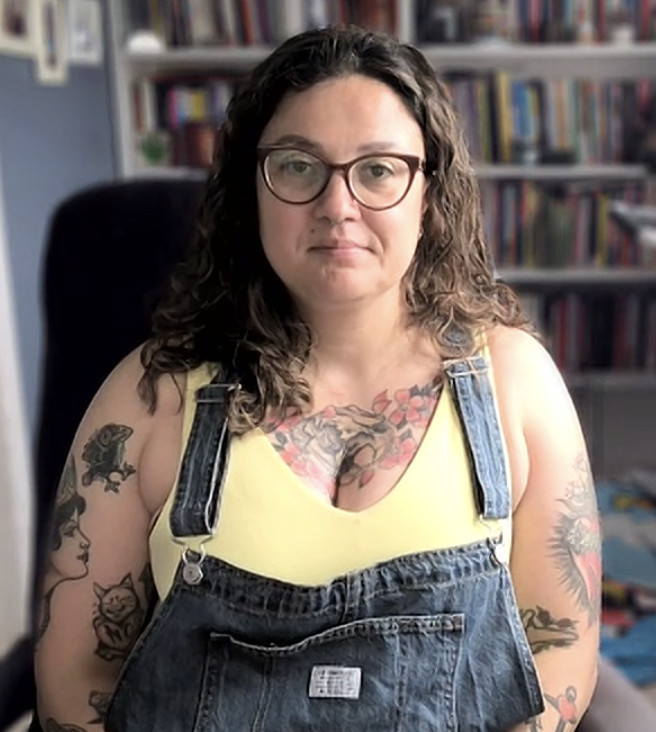
Dr. Ana Antunes — Youth Participatory Action Researcher, Multimedia Creator, and Artist
In this interview, conducted at the 2025 URBAN National Conference, Dr. Ana Antunes reflects on how she came to be a community-engaged researcher, the importance and joy of working with youth and multimedia, and how valuing and trusting people and their perspectives is crucial for social change.
JCEC:
Can you tell me a bit about yourself, the work that you do, and how you ended up being connected to the URBAN Research Network?
Ana:
My name is Ana Antunes. I am an Assistant Professor of Gender Studies at the University of Utah. I have lived in Salt Lake City since 2006 but I was born and raised in Brazil, in Rio. How I got to URBAN… It’s kind of a long story. I had been working with refugee youth here in Salt Lake City prior to going into grad school and I started to read articles around youth participatory action research. By the time I got to my second year in grad school, I had realized that there was no other way to do research with youth that was not participatory action research, from my perspective. As with a lot of students, I had a couple of faculty who had done work with youth, and there was a little bit of resources on my campus, but not a ton. So, I went to AERA (American Educational Research Association) in 2014 or 2015, I can’t remember but it was in Chicago and it was when they still had the printed program, not the app. When you registered they gave you like a book.
As a first year attendee and grad student, it sort of freaked me out, because I was like, “How am I supposed to figure out where to go? I don’t even know how to look at this program!” So, I can’t remember how I found a session that I wanted to go to. I can’t remember how I found it. I was like, “I’m gonna look for this word.” And then I looked it up and found a session and it was from some of the URBAN Fellows. There, they had a little paper with all of the other URBAN sessions at AERA and I said, “I’ll just do this instead of trying to figure out the booklet. I will just do these sessions They’re related to what I’m doing and so I’ll just go to those.” And so, I just started going to those. One of those meetings was the business meeting for the Grassroots SIG and with URBAN, and I just got involved. And then, yeah, from there it just went.
I was like, literally so lost. I was like, “I have no idea how to go to the sessions.” I mean, I know the program is just as big [now when AERA has the program on an App], but you just type stuff in on the cell phone and it’s easier. But when you have the book that you have to flip through, I was like, “I have, I have no idea.” I was so overwhelmed. So when somebody was like,” Here. Here are some sessions.” I was like, “Oh, perfect! I’ll just do that.”
JCEC:
How do you tend to think about collaboration and what kinds of collaborative relationships or practices are you or your organization engaged in?
Ana:
How I approach collaboration… You know there are all of those cheesy sayings like “teamwork makes the dream work,” and “there is no I in team.” All of those, like, super cheesy. But I truly believe that everybody has something to contribute. I think that our job as scholars working with communities, to figure out what we can contribute and how others can contribute in a way that is meaningful to them and important to them. And that only comes from knowing people, from trusting people.
So first, [collaboration comes] from spending time in the community. You can’t figure out what people are great at and what their passions are from just a five minute conversation, right? You learn these things from really engaging meaningfully with people — particularly with young people. I work mostly with young people and, you know, it takes a while; especially for youth of color who, at school, are used to being told that they are not smart, that they can’t do stuff. So, to get them to realize the talents and the skills that they have — and for me to find those as well and figure out what those are — you need time. So, I think collaboration is something that can’t be rushed. It needs to happen on its own time.
And I know that, for academia, that sometimes sucks because you have a deadline and you have a time that you need to do things. But I think that these [relationships] are things that you can’t rush because they’re so important, and they’re the foundation to all the work that we do. Without them, nothing else can be done. So, I think it’s really important to spend a lot of time building relationships, building trust, creating a collaboration that is truly meaningful and impactful for everybody who is involved in it. And I think it takes time.
So, that’s my approach to collaboration. I also love to work with multimedia. I know that was not the question, but you talked about your Journal of Collaboration for Equitable Change (JCEC) as a multimedia journal. I I work a lot with young people and arts and different types of artistic endeavors. I think that is something really important too about collaboration: to figure out ways that you know research or work can be more engaged and involved, not just for the people who are in it, but for the community as well.
JCEC:
Based on your experience, what would you say are some collaboration best practices—particularly in this current context of social upheaval and uncertainty?
Ana:
Like I said, you need time to build trust and community and not brush that aside. I think that is really important. I work with young people, so I’ll talk about that, because that’s the experience that I have. Believing in the knowledge that young people bring into spaces and recognizing their experiences, like validating their experiences, the things that they are experiencing in the classroom or in the community — really valuing the knowledge they bring — I think that’s really important. I also think it’s important to have fun if you’re working with young people. They do really great work and really important work, but it’s also important that we spend time to do silly stuff so that we can engage with each other wholly as human beings, not just as scholars, thinkers, researchers, but as valued members of this community that we’re creating and that we care for each other in different ways. I think that is this really important.
What else do I think is really important? I think for young people, a lot of the things that we talk about in relation to social justice they know and they see and don’t have the words to talk about it. So, [it would be helpful to] think about the way that you can develop this vocabulary and help them understand what’s happening around them, but in a way that values and recognizes that they’ve already had these experiences. They may not be able to talk about it because they haven’t been given this language, but they know what they’re talking about, and they’re experts in these topics because they have that experience. So, it’s not like teaching kids about these concepts. It is showing them what these concepts are and sort of guiding them to figure out the ways that they materialize in their lives and what are some of the things that they can do, which is our point — to change the environment around them or become advocates in their community.
I do research in education with students and students of color and they are the ones that have the experience of being in the classroom with teachers. I haven’t been in high school for a long time, you know, so my experiences don’t matter now, but theirs does, right? So, it’s about helping them observe what’s happening around them through a critical lens. But they’ve already noticed things.